Black Friday Scams Are Getting Smarter. Here’s How They Really Work.
Black Friday has always been a bit chaotic. Doorcrashers. Countdown timers. Deals that last twelve minutes. But in the middle of all that noise, scammers have found the perfect moment to blend in.
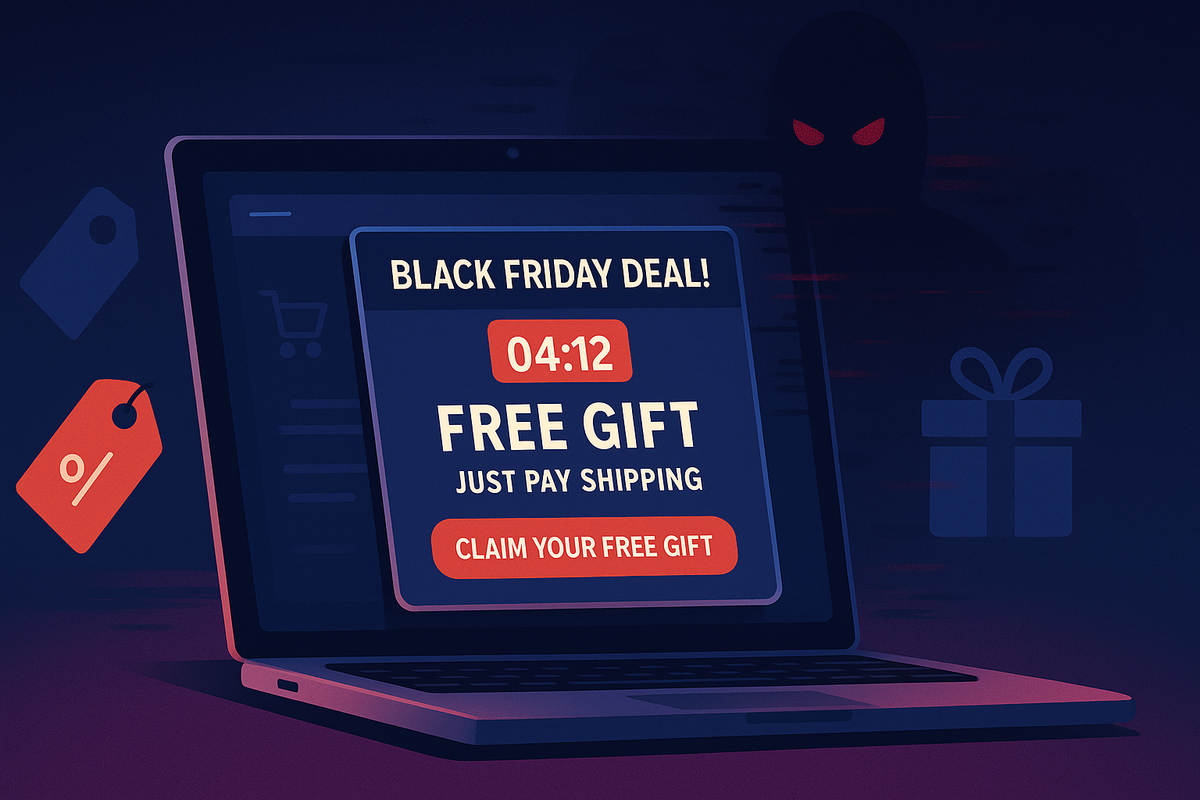
Over the past few seasons, online fraud has shifted from those painfully obvious “You won a free iPad!” pop-ups to something much more polished. Today’s Black Friday scams look legitimate, feel trustworthy and move incredibly fast. And that’s exactly why they work.
What follows is one of the most common and effective patterns we’re seeing: fake brand giveaways designed to quietly steal your personal data and credit card information.
This isn’t a fringe issue. Fake ads and malicious redirects target tens of millions of shoppers every holiday season, and the operations behind them are now running at industrial scale.
The setup: scammers piggyback on real ads
It often starts with a perfectly normal moment.
You click a product review. You scroll past a banner ad. You tap something on your phone without thinking twice.
Behind the scenes, a malicious ad triggers a silent redirect chain. You don’t see anything unusual. The page flickers and suddenly you’re looking at what seems like an official “Customer Appreciation Survey” from a familiar brand.
That split second is all the scammers need.
The bait: fake surveys from recognizable brands
The fake pages almost always follow the same formula. Scammers reuse a single design template and swap in whatever brand is trending that week.
Common impersonations include:
- Big retailers
- Lifestyle brands
- Outdoor gear companies
- Popular toy makers
- Health and wellness brands
- Electronics and home tool brands
The branding looks clean and professionally done. Logos are high-resolution. The page copy is simple and friendly. The background images look like real product photos.
It doesn’t feel sketchy. It feels routine.
The hook: “Complete this quick survey for your reward!”
The survey is intentionally harmless. Four or five generic questions:
- How often do you shop with us?
- Are you satisfied with our service?
- Would you recommend us to a friend?
Your answers don’t matter. The goal is to create micro-commitment. If you’ve answered the questions, you’re more likely to continue to the next step.
At the end of the survey, you’re told:
- You’ve won a reward
- Only a few items are left
- You must claim it within minutes
- A “small shipping fee” applies
That sense of urgency is the trap.
The reward: products that feel perfectly timed to Black Friday
The items offered as “free gifts” are carefully chosen to mirror real Black Friday demand. Scammers study trending searches and hype cycles, then choose products people are already hunting for.
Examples include:
- Smart home gadgets
- Premium athletic wear
- Holiday gift bundles
- High-end cookware
- Toys that sell out every November
- Outdoor or fitness gear
- Pet supply mystery boxes
- Seasonal electronics
The reward feels realistic because it’s exactly the kind of thing you expect to see on a Black Friday promo page.
The takeaway: the “shipping fee” form
Once you click to claim your reward, you land on a simple checkout form. It asks for:
- Full name
- Home address
- Email and phone
- Complete credit card number
- CVV security code
The shipping fee is usually just a few dollars. Harmless enough to justify.
But this is the moment the scam becomes profitable.
Once your personal and financial data is submitted, scammers can:
- Run unauthorized charges
- Sell your information to other fraud networks
- Add your email and phone to high-value scam lists
- Attempt identity-theft-related account takeovers
You never receive the reward. You just gave them everything they needed.
Why these scams succeed
Black Friday scams tap into a perfect storm of psychological triggers.
1. We expect incredible deals this time of year.
That lowers skepticism.
2. Familiar brands create instant trust.
A polished logo disarms people.
3. Countdown timers build pressure.
People act fast when they think the offer is disappearing.
4. “Just pay shipping” feels harmless.
A small cost seems like no big deal.
5. The entire experience feels normal.
It mimics real promotional flows we see every day.
This combination makes the scams difficult for the average shopper to spot until it’s too late.
How to avoid Black Friday scam traps
A few simple rules protect you from most fake giveaway operations:
If an offer comes from an ad, banner or pop-up, don’t trust it.
Go directly to the retailer’s official website.
Be skeptical of “survey reward” pages.
Big brands rarely use them, especially around the holidays.
Never enter full credit card information to claim a prize.
Legitimate companies don’t require shipping fees for giveaways.
Look closely at the website address.
Scammers often use random strings, misspellings or extra letters.
If something feels urgent, slow down.
Scams rely on seconds, not minutes.
Final thoughts
Black Friday brings incredible deals, but it also brings one of the busiest scam seasons of the year. Today’s fraud campaigns don’t rely on broken English and flashing warnings. They rely on branding, psychology and timing.
If an offer seems too perfect, too urgent or too easy, assume it’s engineered to separate you from your data.
Staying skeptical is your best defense. And keeping your browser protected with tools that block malicious redirects and suspicious domains can help stop these scam pages before they ever load.

Black Friday isn’t the only time scammers strike. Take a minute to see what’s out there about you. Go to protect.reklaimyours.com and run a free exposure check, then activate Reklaim Protect for 30 days at no cost. Your data, your choice.