How Data Brokers Actually Get Your Information
And Why You’re Getting So Many Spam Calls, Scam Texts, and Suspicious Emails

Most people assume scammers get their information by hacking into something. But the truth is a lot simpler and a lot more frustrating. Your personal data is being collected, packaged, and sold every single day by data brokers you’ve never heard of. And those transactions are what fuel the endless stream of spam calls, scam texts, and creepy targeted emails that feel like someone is always watching.
Understanding how this happens is the first step in taking back control.
The Silent Industry Behind Your Personal Information
Data brokers sit in the background of the internet. You never interact with them, and you never gave them permission in any personal, meaningful way. Yet they have shockingly detailed files on you:
your name, age, address, phone numbers, shopping habits, interests, income range, and sometimes even your health signals or location patterns.
They collect pieces of your life from dozens of places. None of them seem harmful on their own. Together, they create a map of your identity.
Here’s where they get it.
Loyalty Cards and Rewards Programs
Every time you swipe a loyalty card at the grocery store, sign up for points at a retailer, or use an app to collect rewards, the transaction data is logged and often sold downstream. Your preferences, brand choices, and purchase history are all signals.
“Free” Apps and Services
Nothing is free. Weather apps, flashlight apps, shopping apps, QR code readers, fitness trackers, browser extensions. Many share or sell data about your device, behaviour, and location. You never see it happen, but it’s happening constantly.
Warranty Cards, Online Forms, and Surveys
That little card you filled out when you bought a blender? Or the quick online survey for 10 percent off? Those are gold mines for data brokers. They gather your address, birthday, phone number, and email. Then they resell it.
Websites and Cookies
Every web visit leaves a trail. Your searches, clicks, browsing patterns, and ad interactions are bundled with information from other sources and stitched into a profile.
Public Records
Home purchases. Marriage licenses. Property tax info. Voter registration. All public. All easily scraped. All added to your profile.
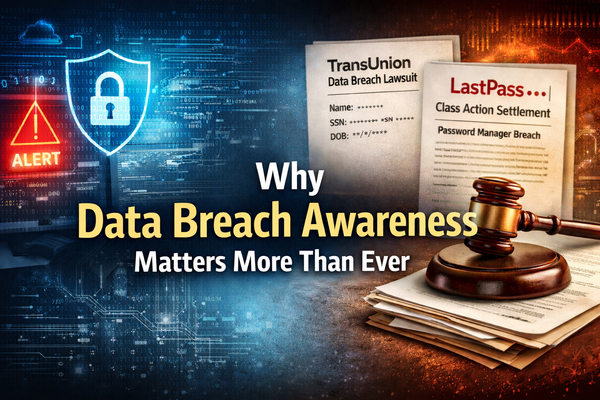
Past Data Breaches
Every major breach makes your information more valuable on the open market. Even old breaches are still circulating, traded and re-traded among brokers and shady actors. One breach never stays in one place.
Why All This Leads to More Spam, More Scams, and More Risk
When your data spreads through dozens of databases, it becomes impossible to contain. That’s when you start noticing things:
The sudden spike in scam calls.
Strange emails that know your name.
Texts pretending to be from your bank.
“Missed delivery” scams that seem oddly specific.
This isn’t intuition. It’s math.
The more places your data exists, the more opportunities scammers have to get their hands on it. And once they do, they don’t stop at annoyance. They target you in smarter, more believable ways, raising the risk of identity theft or financial fraud.
Even if you never fall for a scam, the psychological cost is real.
You stop answering your phone.
You assume every text is a trap.
You second-guess every email.
You live slightly more on edge.
This is what unchecked data exposure creates: a baseline level of stress you never asked for.
Why Removing Your Data Matters
You can’t erase your entire digital footprint, but you can stop the ongoing spread of your data.
Removing your information from data brokers reduces how often your data is circulated, resold, and repackaged. Over time, this lowers the volume of spam and scam attempts because there are fewer entry points for bad actors to find you.
Think of it like shutting off the faucet instead of trying to mop up the floor forever.
Ready to See Where You’re Exposed?
If you want to understand exactly where your information is already circulating, start with the free data exposure tool at protect.reklaimyours.com. It scans the public web to see what’s out there, instantly.
If you want deeper, continuous protection, try Reklaim Protect free for 30 days.
It includes:
- Monthly Removal from 650+ data brokers.
- Automatic registration with all data brokers listed in California’s and Vermont's official Data Broker Registries which forces companies to delete your data or face legal repercussions.
- Dark web monitoring that alerts you if your data is found.
- SMS alerts for major data breaches, helping you act immediately.

It’s your data. Time to Reklaim it.